
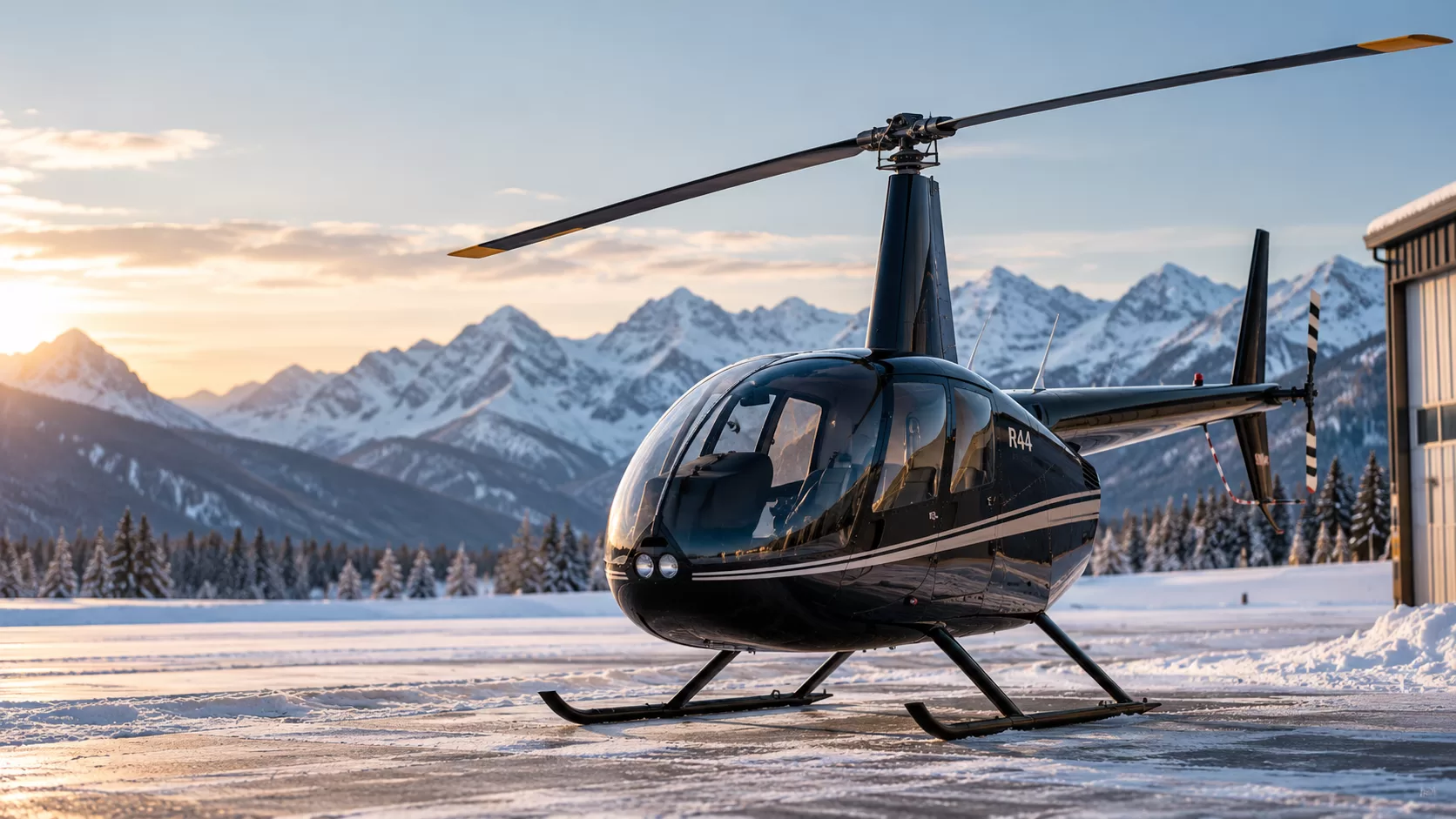
For Canadian helicopter owners, October is when ownership starts to change. The days get shorter, the first frost shows up on the ramp, and every owner has to decide how the next five or six months are going to look.
Some owners fly right through the winter. Others park the aircraft until spring. Either approach can work. What matters is that the decision is made deliberately, because the choices you make over the next few weeks affect how the helicopter starts, how well it holds up, and what it will be worth when it is time to sell.
The good news is that the R44 handles winter well when it is prepared for it. Cold air is dense air, and many pilots enjoy the crisp performance of a clear winter day. The challenges usually come from the ground: cold starts, storage, moisture, and the calendar.
Decide Early: Fly Through Winter or Park Until Spring
There is no single right answer here. Each option has its own costs.
Flying Through Winter
Owners who keep flying need a plan for preheating, snow and frost removal, hangar access, and pilot currency in winter conditions. Costs such as preheat equipment or heated hangar space go up, but the aircraft stays in use, systems stay exercised, and the pilot stays sharp.
Parking Until Spring
Owners who park the aircraft save on fuel and hourly maintenance, but fixed costs continue. Insurance, storage, and the annual inspection all still apply. The aircraft also needs to be put away properly, which we cover below.
The Calendar Keeps Running Either Way
This is the part many owners overlook. Every R44 runs on two clocks: flight hours and calendar time. An aircraft parked from November to April still uses up roughly half a year of calendar life without adding a single hour of use.
That does not mean you should fly just to fly. But it is worth knowing where your aircraft sits on both clocks before deciding how to spend the winter. We explain this in more detail in The Hidden Cost Most Robinson R44 Owners Never See.
Cold Starts and Engine Preheat
The R44 is powered by a Lycoming engine, and cold starts are where winter does the most damage if they are not handled properly.
When an engine is cold soaked, the oil thickens and takes longer to reach the parts that need it. Much of an engine’s wear happens in the first moments after a start, and a cold start makes those moments worse. Lycoming’s cold weather starting guidance calls for preheat once the engine has cooled below about -12°C (10°F), and many owners choose to preheat well above that temperature for the extra protection.
Common preheat options include:
- A heated hangar, which is the simplest and most complete solution
- Forced-air engine preheaters
- Engine-mounted electric heating systems such as Tannis heaters.
Whichever method you use, the goal is to warm the whole engine, not just the oil sump. Always follow the Pilot’s Operating Handbook and Lycoming’s published guidance, and ask your maintenance facility whether your oil grade is right for the temperatures you will be flying in. Lycoming’s service publications are available on the Lycoming website.
Battery and Electrical System
Cold weather reduces battery performance. A battery that was getting by in the summer is often the first thing to fail on a cold morning.
Have the battery tested before winter sets in. If the aircraft will sit for long periods, talk to your maintenance facility about keeping the battery charged using equipment suited to the battery installed in your aircraft. Replacing a tired battery in October is far less frustrating than discovering it on the first flyable day in January.
Frost, Snow and Ice
Rotor blades and the airframe must be completely free of frost, snow, and ice before flight. Even a thin layer of frost changes the shape and surface of a rotor blade and can affect performance and handling.
A few practical points:
- Never chip or scrape ice from the rotor blades with tools that could damage the blade surface.
- A heated hangar is the easiest way to deal with frost and snow.
- If the aircraft is stored outside, quality covers and proper blade tie-downs help, but they do not eliminate the need for a thorough pre-flight check.
- The R44 is not approved for flight into known icing conditions. Plan flights accordingly.
Carburetor Ice on Carbureted Models
Carbureted R44 models, such as the Raven I and Cadet, can develop carburetor ice. Many pilots are surprised to learn that carb ice is not only a winter problem. It can form in cool, humid conditions well above freezing, which makes fall one of the higher risk seasons. Follow the carb heat procedures in your Pilot’s Operating Handbook and Robinson’s safety guidance. Fuel-injected models such as the Raven II are not subject to carburetor ice in the same way.
Cabin Heat and Carbon Monoxide
Winter is when the cabin heater gets used the most. On the R44, cabin heat comes from the engine exhaust system, which means a crack or leak in the exhaust can allow carbon monoxide into the cabin.
Before winter, have the exhaust and heater system inspected and make sure the carbon monoxide detector is working. It is a small step that deserves attention every year.
Winter Storage: Heated, Cold, or Outdoor
Where the helicopter spends the winter affects both how easy it is to fly and how well it holds its value.
Heated Hangar
The best option. Starts are easier, there is no frost to remove, and the aircraft is protected from the moisture and temperature swings that drive corrosion.
Cold Hangar
A good option that protects the aircraft from snow, hail, wind, and UV. Preheat is still needed, and condensation can form when temperatures swing from cold to mild.
Outdoor Storage
Workable with good covers and tie-downs, but it means more preheating, more snow and frost removal, and more exposure to the elements. Over several winters, that exposure shows up in paint, seals, and interior condition.
One issue worth singling out is condensation. Moving an aircraft between a warm space and a cold one can leave moisture in areas that are hard to see and slow to dry. Over time, that moisture becomes corrosion, and corrosion is one of the factors we cover in What Actually Lowers an R44’s Resale Value. Consistent storage is better than constant temperature swings.
Consider Cold Soaking:
When operating in cold conditions, it can be helpful to let the aircraft and hangar cool closer to the outside temperature before moving the helicopter outdoors.
Taking a warm aircraft directly into cold snow, freezing fog, or other precipitation can cause moisture to stick to the surfaces and freeze. That contamination then has to be completely removed before flight.
Reducing the temperature difference before moving the aircraft outside can make winter ground handling easier and help reduce frost and ice buildup.
Parking for the Season? Put It Away Properly
An aircraft that sits for months is not simply on pause. Moisture and acids in the oil can cause internal engine corrosion when an engine is not run for long periods, and seals and other components can suffer from lack of use.
If your R44 will be parked for an extended period, talk to your maintenance facility about the right approach before you put it away. That conversation usually covers:
- Engine preservation, following Lycoming’s guidance for engines that will be inactive
- Oil condition, since fresh oil is better than used oil for storage
- Battery care
- Covers, plugs, and protection from moisture and rodents
- What needs to be checked before the first flight in spring
One common habit to avoid is running the engine on the ground every few weeks just to “turn it over.” A short ground run rarely gets the oil hot enough to drive off moisture and can leave more condensation behind than it removes. If the aircraft is going to run, it is generally better to fly it long enough to bring everything up to temperature, or to preserve it properly and leave it.
Use the Slow Season for Maintenance
For many owners, winter is the best time to get maintenance and upgrades done. Maintenance facilities tend to be busiest in the spring when everyone wants to start flying at once.
Scheduling the annual inspection during the winter, and combining it with the 100-hour inspection where it makes sense, means the aircraft is ready to fly as soon as the weather turns. It also keeps the annual inspection on the same timing every year, since the next annual will come due twelve months later. Our guide to the Robinson R44 maintenance schedule explains how these inspections fit together.
Winter is also a practical time for avionics work, paint, or interior refreshes, since the aircraft is not missing prime flying days while it is in the shop.
Pilot Readiness
Winter flying asks more of the pilot as well as the aircraft. Shorter days leave less margin. Snow can hide obstacles and uneven ground at landing sites. Flat light and blowing snow from rotor wash can make it difficult to judge height and references close to the ground.
If you plan to fly through the winter, consider recurrency training focused on winter conditions. It keeps skills current, and many insurers look favourably on pilots who keep their training up to date.
Winter and the Aircraft Market
It used to be common wisdom that aircraft sell in the spring. Spring still brings more interest, but aircraft are now marketed across North America and around the world, and we have sold aircraft in every month of the year.
For buyers, winter can be a good time to shop. There is often less competition, and it leaves time to complete a pre-purchase inspection, review the logbooks, and handle registration so the aircraft is ready to fly when the season starts.
For sellers, winter is a good time to prepare. A fresh annual inspection, organized records, and an aircraft that has been stored well all make a stronger listing when spring demand arrives. If you are thinking about selling next year, our buy and sell team can help you plan the timing.
How Aerial Recon Helps
Aerial Recon has been Canada’s authorized Robinson dealer since 1985. We work with private owners and commercial operators across the country, and Canadian winters are part of ownership we understand well.
Whether you want to talk through storage options, plan your maintenance timing, understand where your aircraft sits on both clocks, or decide whether this winter is the right time to buy or sell, we are happy to help.
Conclusion
A Canadian winter does not have to be hard on your R44. Most of the problems owners run into, such as hard starts, dead batteries, corrosion, and a spring maintenance backlog, can be avoided with a little planning in the fall.
Decide how you will use the aircraft this winter, prepare it for that plan, store it well, and use the slow season to get ahead of maintenance. Your helicopter will be ready when spring arrives, and its value will be better protected for the long run.
If you would like help preparing your aircraft for winter or planning your next steps, contact Aerial Recon. You can also browse our current buy and sell listings or learn more about the Robinson R44. For regulatory reference, see Transport Canada Civil Aviation and the Robinson Helicopter Company.
Frequently Asked Questions
Can you fly a Robinson R44 in winter? Yes. Many Canadian owners fly their R44 year-round. Winter flying requires proper preheating, complete removal of frost, snow, and ice before flight, suitable storage, and a pilot who is current and comfortable in winter conditions. The R44 is not approved for flight into known icing.
When does an R44 engine need to be preheated? Lycoming’s cold weather guidance calls for preheat once the engine has cooled below about -12°C (10°F). Many owners preheat at warmer temperatures for added protection. Always follow the Pilot’s Operating Handbook and Lycoming’s published guidance.
Is it better to store a helicopter in a heated hangar over winter? A heated hangar is the best option. It makes starts easier, eliminates frost removal, and reduces the moisture and temperature swings that contribute to corrosion. A cold hangar is still far better than outdoor storage.
Does parking my R44 for the winter save money? It reduces fuel and hourly maintenance costs, but fixed costs such as insurance, storage, and the annual inspection continue. Calendar time also keeps running, which affects the aircraft’s overhaul timing and long-term value.
Should I run my helicopter’s engine on the ground during winter storage? Generally, no. Short ground runs rarely bring the oil up to full temperature and can leave moisture behind. Speak with your maintenance facility about proper preservation if the aircraft will be inactive for an extended period.
Is winter a good time to schedule my R44’s annual inspection? For many owners, yes. Maintenance facilities are often less busy, the aircraft is not missing prime flying days, and it will be ready to fly in the spring. Combining the annual with the 100-hour inspection where possible reduces downtime.
Is winter a good time to buy or sell an R44? It can be. Buyers often face less competition and have time to complete inspections and registration before spring. Sellers can use the winter to prepare the aircraft and list ahead of spring demand.