
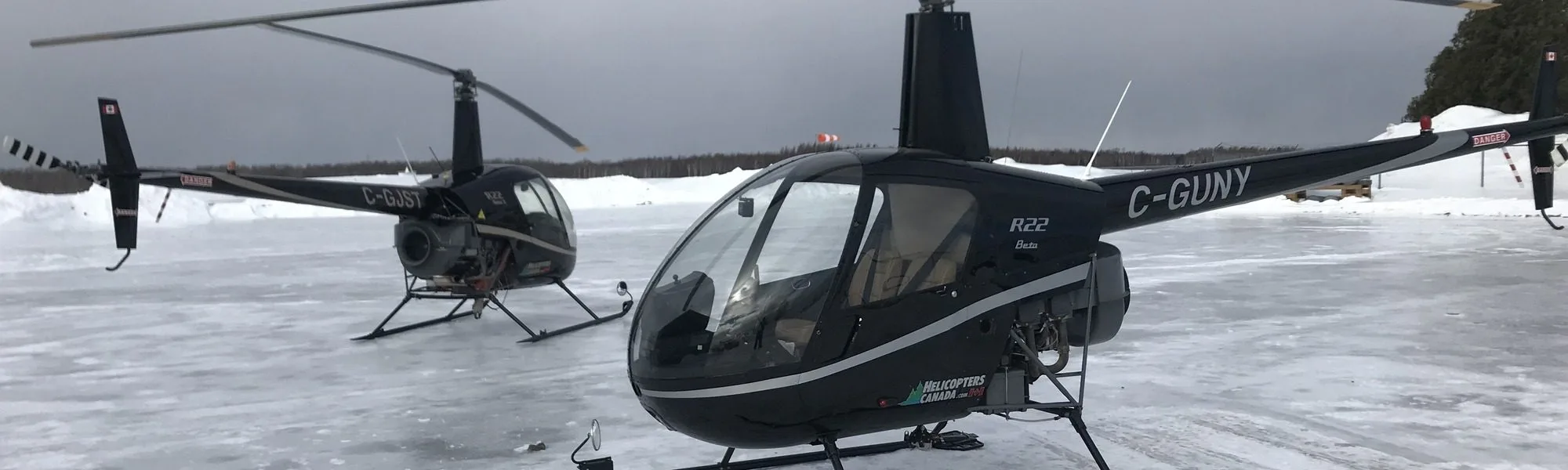
R22
Superior performance, outstanding reliability, and exceptional value have made the two-seat R22 the world’s most popular entry-level helicopter for nearly two decades. More than 3,600 R22 helicopters have been delivered to more than 60 countries around the globe. The R22 holds major performance records in its weight class including speed and distance. And the latest R22 Beta II is still sensibly priced with the industry’s lowest cost of operation.
The Beta II is generously equipped and offers a wide selection of options. Standard features include a precision-engineered RPM governor, a durable rotor brake, an auxiliary fuel system for added versatility and increased range, plus a high-quality voice-activated intercom. The Beta II’s clean aerodynamic design allows a high cruise speed up to 110 mph and an average fuel consumption of only 7 to 10 gallons per hour. The cabin provides comfortable seating for two with removable dual controls on the passenger side.
The R22 is a classic example of design excellence. No other helicopter in its class can match its speed, reliability, affordable price, and low operating costs. The R22 has fewer accidents due to aircraft or engine failure than other light helicopters, and Robinson’s commitment to the highest quality in design, materials, and craftsmanship makes it the enduring choice for flight training, radio traffic watch, power line patrol, and other applications that require performance, dependability, efficiency, and easy maintenance.
The R22 became the top-selling helicopter in 1988.

R22 Beta II
| Specifications | R22 Beta II |
|---|---|
| Engine | Lycoming O-360, four cylinder, carbureted |
| Horsepower | Derated to 131 for takeoff and 124 continuous |
| Maximum Gross Weight | 1370 lb (622 kg) |
| Approximate Empty Weight (including oil & standard avionics) | 880 lb (399 kg) |
| Standard Fuel (16.9 gal) | 101 lb (46 kg) |
| Auxiliary Fuel (9.4 gal) | 56 lb (25 kg) |
| Pilot, Passengers, and Baggage (with standard fuel) | 389 lb (176 kg) |
| Cruise Speed at Maximum Gross Weight | up to 96 kts (178 km/h) |
| Maximum Range (no reserve) | approx 250 nm (460 km) |
| Hover Ceiling IGE | 9400 ft @ 1370 lb |
| Hover Ceiling OGE | 5000 ft @ 1370 lb |
| Maximum Operating Altitude | 14,000 ft |
| Electrical System | 14 volt |
OPTIONAL EQUIPMENT
STANDARD EQUIPMENT &
OPTIONS AVAILABLE
Standard Avionics:
- Garmin GTR 205 COM with 15 memory channels, cyclic grip control
- Garmin GTX 335 transponder with ADS-B Out
- Garmin GMA 350Hc audio panel
- Intercom switches at each seat
- Avionics master switch
- Mono and stereo headset jacks (U174 and 6-pin LEMO)
- Cockpit video camera, 4K Ultra HD
Optional Avionics:
- Garmin GTN 635Xi GPS/COM, pilot-side console or instrument panel (requires GMA 350Hc)
- Garmin GTN 650Xi GPS/COM/NAV, pilot-side console or instrument panel (requires GMA 350Hc and CDI)
- Garmin GTX 345 ADS-B In/Out transponder with Bluetooth
- Kannad 406 Integra AF-406 MHz ELT, or ELT provisions only
- Mid-Continent MD CDI (requires GTN 650Xi with NAV)
- Kelly Mfg RCA2610-3 LCD artificial horizon with slip skid
- Mid-Continent turn coordinator
- Instantaneous vertical speed indicator (IVSI)
- Quartz clock, magnetic compass or millibar altimeter in place of the standard units
Standard instruments:
- Rate-of-climb indicator
- Airspeed indicator
- Rotor and engine dual tachometer
- Sensitive altimeter (in-Hg)
- Manifold pressure gage
- Digital chronometer, Davtron 800
- Vertical card compass
- Digital OAT gage/voltmeter
- Hourmeter
- Oil temperature and pressure gages
- Cylinder head temperature gage
- Fuel gages
- Ammeter
- Carb air temperature gage
Standard Equipment:
- Lycoming O-360 four-cylinder piston engine
- Crashworthy fuel system with bladder tanks
- Removable dual controls
- Rotor brake
- RPM governor
- Electronic ignition system
- Electronic engine monitoring unit for maintenance and engine health tracking
- RHC engine oil filter installation
- Engine oil quick-drain
- Carb heat assist
- Six-hole instrument panel
- Fabric velour seats
- Tinted windshield and door windows (clear at no charge)
- Three-point shoulder harnesses
- Carpeting and acoustic interior
- Muffler and soundproofing
- Under-seat storage compartments
- Door locks
- Hard point on belly
- Warning lights and low rotor RPM horn, plus high rotor RPM audio alert
- 12 volt, 24 amp hour battery
- Dual landing lights
- Panel and map lights
- LED anti-collision and navigation lights
- Tow-cart adapter and ground handling wheels
- Windshield cover, custom fabric travel bag and rotor blade tie-downs
Turbine Engines:
QUICK INFORMATION
Paul Lesson
Eric helped me immeasurably in making my decision to buy an R44 – in my case the Raven II to facilitate mountain operations. We were looking for an affordable and reliable (primarily) two person ship with enough room and payload for camping gear so we could explore the western mountains. His long experience in the industry helped convince me that I did not want the completely unpredictable maintenance costs of a turbine alternative like a Bell 206. Now after flying another season of Jet Rangers, and Long Rangers at work, and bringing my log book up to 625 hours air time, I see the surprises that turn up at supposedly routine 100 hour inspections. I am more thankful than ever for Eric’s counsel.
 What about performance you ask? I can’t help but feel like a reasonably loaded R44 feels much more capable and willing than a Jet Ranger in a similar circumstance, and while I am not trying to fill all the seats, cram the baggage compartments, and fill the fuel tanks before prowling around 9000 foot peaks with any intention of landing, I have easily slipped into any number of alpine hideaways over 7000 feet with half full tanks, and 2 or 3 of us on board with our hiking packs and other supplies for the day. So far I have not used more than maximum continuous power to get in or to get out of even my highest landings, so there remains all that 5 minute take-off power reserve for a moment of inattentiveness, much more than I can say for my average working day in a Jet Ranger.
 In my opinion this is a truly great ship, and you cannot do better than to select Eric as a dealer. He solved every roadblock in my way, even those that cropped up at the very last minute, and he did it all without ever batting an eyelash. You’d think I was his only customer, something I know is far from the truth – it seems like everyone I have met in Western Canada has purchased their machine from him, and they are all equally complimentary! I am now a believer – the R44 Raven II is far and away the ship of choice for any conceivable private use, and that will not change, for many reasons, even after the introduction of the R66.
HAVE A QUESTION? LET’S TALK. WE’RE HERE TO HELP!

BLOG
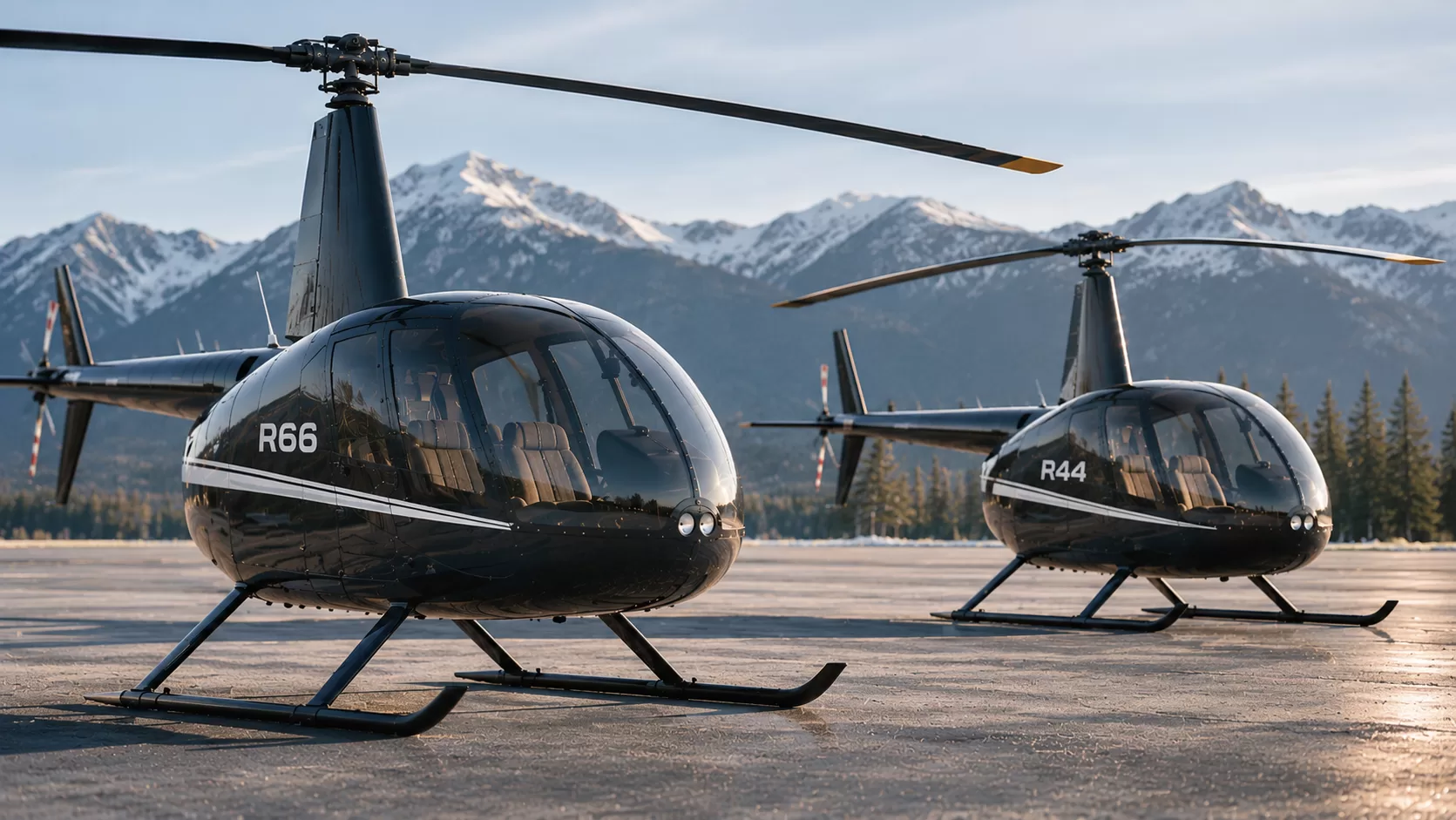
Robinson R66 vs R44: Which One Is Right for You?
Most buyers who are looking at a Robinson end up asking the same question: should it be the R44 or the R66? The R66 is the bigger, more powerful turbine. The R44 is the proven piston that has been one... View Article
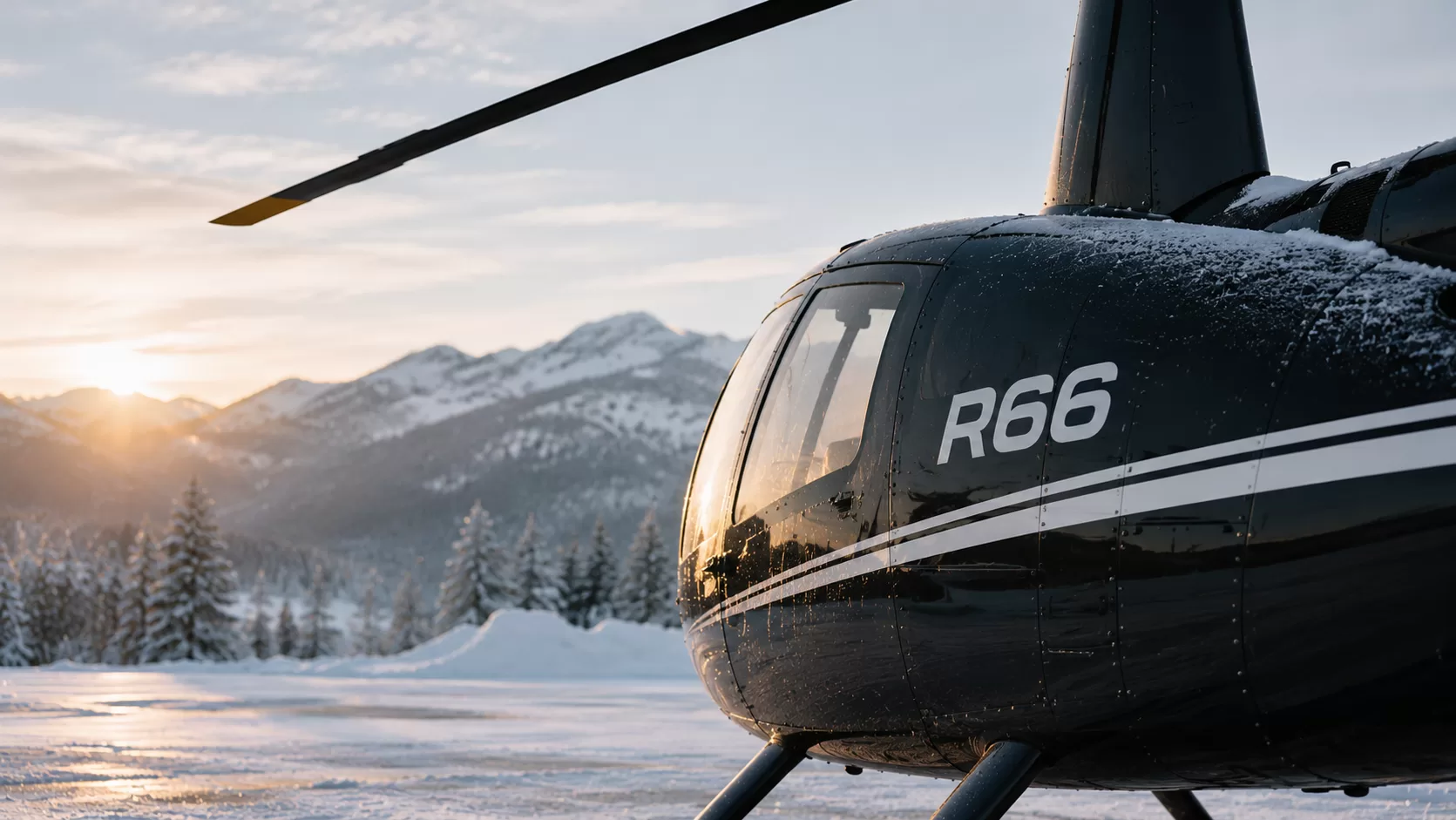
Getting Your Robinson R66 Ready for a Canadian Winter
By November, every Canadian helicopter owner has made a decision, whether they meant to or not. The aircraft is either going to fly through the winter or sit until spring. Either approach works. What matters is that the choice is... View Article
Robinson R44 Component Life Extended to 2,500 Hours and 15 Years
Robinson Helicopter Company has announced some significant changes to the life limits of major components on the R44 helicopter. For owners and operators, this could mean lower maintenance costs, longer component life and improved aircraft values. On November 2, 2026,... View Article