
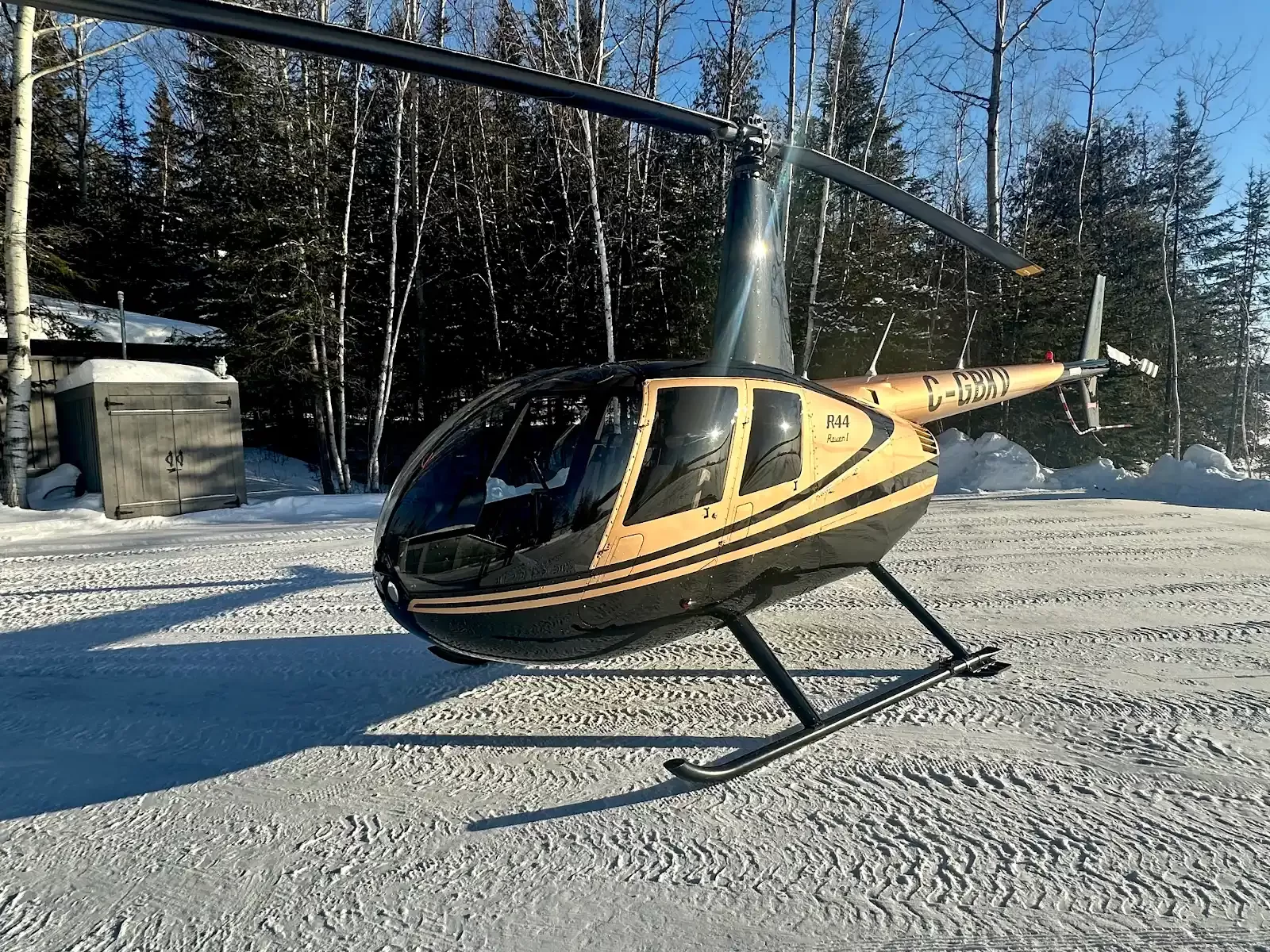
When most owners think about the value of their Robinson R44, they usually look at one number:
Flight hours.
While hours certainly matter, they’re only one piece of the equation.
Aircraft buyers evaluate dozens of factors before determining what an R44’s resale value is, and some of the biggest influences have nothing to do with how much the helicopter has flown.
Two aircraft with similar hours can sell for dramatically different prices because of their maintenance history, calendar age, storage conditions, or previous repairs.
If you’re thinking about selling your helicopter, or simply want to protect your investment, understanding what buyers look for is one of the smartest things you can do.
1. Damage History
Nothing affects an aircraft’s value faster than damage history.
That doesn’t mean every repaired aircraft is a poor purchase.
Many Robinson R44s have undergone professional repairs and continue to operate safely for years.
The difference is how the damage occurred, how extensive it was, and who completed the repairs.
Buyers want to know:
- Was the repair completed using approved procedures?
- Is the damage fully documented?
- Were original parts used?
- Who performed the repair?
Complete documentation builds confidence.
Missing information creates uncertainty.
And uncertainty almost always lowers value.
2. Maintenance History
One of the first things experienced buyers review is the aircraft’s maintenance records.
An R44 that has been consistently maintained according to Robinson’s recommended schedule will generally command a stronger resale value than one with deferred maintenance or inconsistent servicing.
Regular maintenance demonstrates responsible ownership.
Deferred maintenance tells buyers they may inherit unexpected expenses.
If you’re unfamiliar with the maintenance schedule, our guide to Robinson R44 Operating Costs explains how scheduled maintenance contributes to the total cost of ownership.
3. Calendar Time Can Matter More Than Flight Hours
This surprises many first-time owners.
An aircraft doesn’t stop aging simply because it isn’t flying.
The Robinson R44 reaches its overhaul limit based on calendar time or flight hours, whichever comes first.
That means a helicopter with relatively low hours but very little calendar life remaining may actually be worth less than a higher-hour aircraft with several years before overhaul.
We explain this concept in greater detail in our article on The Hidden Cost Most Robinson R44 Owners Never See.
Buyers aren’t just purchasing remaining hours.
They’re purchasing the ability to use those hours.
4. Missing Logbooks
Aircraft logbooks are more than maintenance records.
They are the aircraft’s history.
Missing logbooks raise immediate questions:
- Has all maintenance been completed?
- Were inspections performed on time?
- Has the aircraft experienced previous damage?
- Are all components properly tracked?
Even if maintenance was completed correctly, incomplete records reduce buyer confidence.
In aviation, confidence has value.
5. Corrosion
Corrosion isn’t always obvious.
In many cases it develops gradually and may not become visible until panels are removed during inspection.
Canadian aircraft face unique environmental challenges including:
- Moisture
- Snow
- Road salt
- Coastal environments
- Long periods of storage
While some corrosion can be treated, extensive corrosion often increases maintenance costs and may influence resale value.
Routine inspections and proper storage remain the best defence.
For more information on aircraft maintenance standards, visit Transport Canada Civil Aviation.
6. Poor Storage Conditions
How an aircraft is stored says a great deal about how it has been cared for.
An R44 stored indoors is generally better protected from:
- UV exposure
- Moisture
- Hail
- Snow
- Wind
- Temperature extremes
Outdoor storage doesn’t automatically reduce value.
However, long-term exposure to the elements can accelerate wear on paint, interior materials, seals, and other components.
Buyers often notice these details long before they review the logbooks.
7. Overdue Inspections
Scheduled inspections exist for a reason.
Missing inspection intervals or delaying required maintenance immediately raises concerns for prospective buyers.
Even if overdue inspections are eventually completed, buyers may question:
- What other maintenance has been deferred?
- Was the aircraft flown while overdue?
- Have additional issues developed?
Keeping inspections current helps preserve both safety and resale value.
8. Unapproved or Poorly Documented Modifications
Many owners personalize their aircraft.
Some modifications improve functionality or modernize the cockpit.
Others can complicate future resale.
Buyers generally prefer modifications that are:
- Professionally installed
- Properly documented
- Approved for the aircraft
- Supported by complete paperwork
Poorly documented modifications often create unnecessary questions during pre-purchase inspections.
The easier an aircraft is to evaluate, the easier it is to sell.
What Doesn’t Necessarily Lower Value?
Some factors concern owners far more than buyers.
Flight hours are one of the strongest factors affecting a Robinson R44’s resale value. As total airframe hours increase, the aircraft naturally depreciates, and every additional hour flown reduces the remaining service life before overhaul. While the impact of a few additional flight hours is generally minimal, the total number of hours accumulated over the life of the aircraft is one of the primary factors buyers use to determine value.
However, flight hours don’t tell the whole story.
A well-maintained Robinson R44 with complete logbooks, strong remaining calendar life, and no significant damage history can often command more buyer confidence than an aircraft with lower hours but poor documentation or deferred maintenance.
Higher flight hours don’t automatically reduce value if the aircraft has:
- Excellent maintenance records
- Strong remaining calendar life
- Complete logbooks
- No significant damage history
- Been properly stored
Likewise, a professionally repaired aircraft isn’t automatically undesirable.
Buyers evaluate the complete picture, not a single number.
Value Comes From Confidence
When buyers purchase a Robinson R44, they’re buying more than a helicopter.
They’re buying confidence.
Confidence that:
- The maintenance has been completed correctly.
- The aircraft has been cared for.
- The records are complete.
- The remaining life has been accurately represented.
- There won’t be unexpected surprises after closing.
Every piece of documentation that supports those conclusions helps protect value.
Every unanswered question tends to reduce it.
How Aerial Recon Helps Owners Maximize Value
At Aerial Recon, we evaluate Robinson helicopters every day.
We don’t simply look at flight hours.
We assess the complete picture, including:
- Calendar life
- Maintenance history
- Component times
- Damage history
- Aircraft condition
- Documentation
- Current market demand
That allows us to provide realistic market guidance whether you’re buying, selling, or simply planning ahead.
If you’re considering selling your helicopter, our Buy & Sell team can help determine where your aircraft sits in today’s market.
Final Thoughts
Every Robinson R44 loses value differently.
Some aircraft depreciate because of time.
Others because of deferred maintenance.
Some lose value simply because buyers don’t have confidence in the documentation.
The good news is that many of these factors are within an owner’s control.
Keeping accurate records, completing maintenance on schedule, protecting the aircraft from the elements, and planning ahead before major maintenance events can all help preserve resale value.
If you’re wondering what your R44 is worth today, or what steps you can take to maximize its value before selling, contact Aerial Recon. We’ll provide an honest assessment based on your aircraft’s condition, history, and position in the current market.
Frequently Asked Questions
What affects an R44’s resale value the most?
The biggest factors include damage history, maintenance records, calendar age, overhaul timing, corrosion, storage conditions, complete logbooks, and overall aircraft condition.
Does damage history always reduce an R44’s value?
Not necessarily. Professionally repaired damage with complete documentation generally has less impact than undocumented or poorly repaired damage. Buyers are primarily looking for confidence and transparency.
Do low flight hours always increase an R44’s value?
No. Low flight hours can be offset by limited remaining calendar life. Buyers evaluate both flight hours and the time remaining before the mandatory overhaul.
Why are aircraft logbooks so important?
Logbooks document maintenance, inspections, repairs, component changes, and aircraft history. Missing or incomplete records create uncertainty and often reduce resale value.
Can proper storage help maintain an R44’s value?
Yes. Indoor storage helps protect the aircraft from moisture, UV exposure, temperature extremes, and environmental wear, all of which contribute to preserving long-term condition and resale value.