
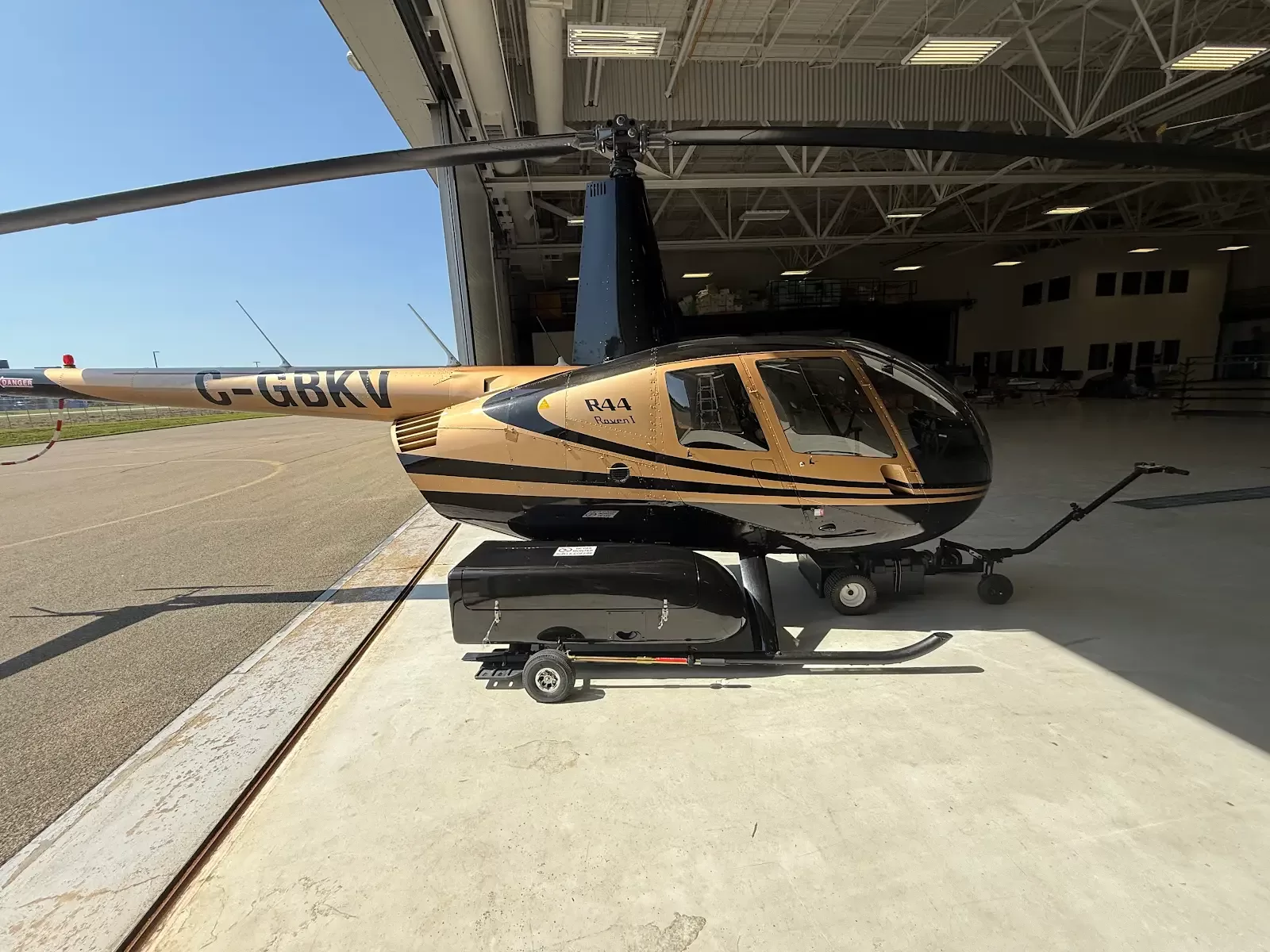
When people think about the cost of owning a Robinson R44, they usually think about fuel, insurance, hangar fees, or routine maintenance.
While those are all important expenses, they are not what costs most owners the most money.
The biggest financial risk often comes from something many owners don’t fully understand until it’s too late: the relationship between the Robinson R44’s flight hours and calendar life.
Every Robinson R44 is governed by two separate clocks, and understanding how they work together can make the difference between protecting your investment and leaving significant value on the table.
If you’re considering buying a Robinson R44, it’s worth understanding the full picture of Robinson R44 operating costs before making your purchase. While fuel and maintenance are ongoing expenses, the timing of your aircraft’s overhaul can have an even greater impact on long-term ownership costs.
Every Robinson R44 Runs on Two Clocks
Every Robinson R44 reaches its mandatory overhaul when it reaches either:
- 2,200 flight hours
- 12 calendar years
Whichever comes first.
This requirement is established by the manufacturer and forms one of the most important factors affecting an aircraft’s long-term value. You can learn more about the Robinson R44 and its specifications on the Robinson Helicopter Company website.
Many owners focus almost entirely on the flight hours.
The calendar, however, never stops.
Whether your helicopter flies every day or spends most of its life in a hangar, those twelve years continue counting down.
Why the Two Clocks Matter
Think of your R44 as having both a mileage limit and an expiry date.
Every hour you fly uses part of the aircraft’s available life.
At the same time, every year that passes reduces the amount of calendar life remaining before the required overhaul.
The goal is simple:
Use as much of your available flight time as possible before the calendar reaches its limit.
When those two clocks stay reasonably balanced, owners recover the greatest value from their aircraft.
When they don’t, the financial consequences can be significant.
The Hidden Cost of Flying Too Little
Many private owners fly between 50 and 150 hours each year.
At that pace, it’s common for the aircraft to reach its 12-year calendar limit with hundreds, or even more than a thousand, flight hours still remaining.
On paper, that may seem like good news.
After all, the helicopter hasn’t been flown very much.
Unfortunately, that’s not how the market views it.
Once the calendar reaches the overhaul limit, those remaining hours become increasingly difficult for a buyer to use.
Those hours may technically still exist, but they no longer contribute the same value they once did.
Why Unused Hours Don’t Always Add Value
One of the most common misconceptions among Robinson owners is that lower flight hours automatically mean a more valuable aircraft.
The reality is more nuanced.
Buyers evaluate two things together:
- Remaining flight hours
- Remaining calendar life
If an aircraft only has a year or two left before overhaul, there simply isn’t enough time for most owners to use hundreds of remaining flight hours.
As a result, those unused hours contribute very little to the aircraft’s resale value because the next owner will still be responsible for the overhaul.
The hours were paid for when the aircraft was purchased.
If they are never flown, that value is effectively lost.
A Simple Example
Imagine two Robinson R44 helicopters.
Aircraft A
- 1,600 flight hours
- 8 years old
Aircraft B
- 700 flight hours
- 11 years old
At first glance, Aircraft B appears to be the better buy because it has substantially fewer hours.
However, Aircraft A still has several years to use its remaining flight hours.
Aircraft B has very little calendar life left before the overhaul becomes mandatory.
Although it has significantly more hours remaining on paper, many buyers will never have the opportunity to use them.
In many situations, Aircraft A can actually represent better long-term value.
Every Hour You Fly Before Overhaul Has Value
Once you’ve purchased your helicopter, those available flight hours are already part of your investment.
Every hour flown before the overhaul deadline helps recover that value.
Every hour left unused when the calendar expires is value that disappears.
This is why maximizing the usable hours within the available calendar life is one of the most cost-effective strategies for both private and commercial owners.
It’s also why understanding your aircraft’s position on both clocks is just as important as understanding its operating costs.
If you’re new to ownership, our guide to buying your first helicopter explains many of the factors that influence long-term ownership success.
Timing Changes Everything
The earlier you recognize that your aircraft’s hours and calendar time are falling out of balance, the more options you have.
Owners may choose to:
- Increase annual utilization.
- Sell while significant calendar life remains.
- Transition the aircraft to a commercial operator with higher annual flight hours.
- Develop a long-term ownership strategy before major maintenance becomes a concern.
Waiting until only a year or two remains before overhaul significantly reduces those options.
By then, many buyers have already factored the upcoming overhaul into the price they’re willing to pay.
Why Commercial Operators See Value Differently
Commercial operators often fly several hundred hours each year.
That allows them to make effective use of aircraft that may have relatively little calendar life remaining but still carry significant available flight hours.
Private owners generally cannot.
A helicopter with limited calendar time may be an excellent fit for a commercial operator while representing a poor long-term investment for someone flying only a few dozen hours each year.
Understanding who the ideal buyer is for your aircraft can make a meaningful difference when it comes time to sell.
At Aerial Recon, helping buyers and sellers understand those differences is a core part of what we do through our Buy & Sell services.
How Aerial Recon Helps Owners Protect Their Investment
Every Robinson R44 tells a different story.
Some aircraft have hours and calendar life that are well balanced, making them attractive to private owners looking for years of reliable flying.
Others may have significant flight hours remaining but limited calendar life. While that may reduce their appeal to a private buyer, they can still represent excellent value for commercial operators who fly enough each year to maximize the remaining usable time before overhaul.
That’s where experience matters.
At Aerial Recon, we work with both private owners and commercial operators across Canada. By understanding how your aircraft’s flight hours, calendar life, maintenance history, and market demand fit together, we can help identify the right buyer and maximize the value of your aircraft.
Whether you’re planning to sell next year or several years from now, understanding where your aircraft sits today gives you more options tomorrow.
If you’re considering upgrading or selling your helicopter, explore our current Robinson R44 listings or learn more about our Aircraft Buy & Sell services.
Don’t Wait Until the Calendar Runs Out
One of the biggest mistakes owners make is waiting until the overhaul is approaching before asking what their aircraft is worth.
Unfortunately, by that point, much of the value may already have been lost.
An aircraft with several years remaining before overhaul offers flexibility.
An aircraft with only months remaining has far fewer opportunities to recover its unused flight hours.
The earlier you understand your aircraft’s position on both clocks, the more choices you’ll have.
That may mean increasing utilization, selling while significant calendar life remains, or simply planning your ownership strategy more effectively.
Looking Ahead: The Robinson R44 Overhaul Extension
Robinson Helicopter Company has announced an extension of the R44 overhaul interval for qualifying aircraft, increasing the limit from 12 years / 2,200 hours to 15 years / 2,500 hours.
While this is positive news for many owners, the extension does not automatically apply to every aircraft. Eligibility depends on several factors, including the aircraft’s configuration and applicable service requirements.
We’ve covered those details in our guide to the R44 Overhaul Extension, where we explain what has changed and what it could mean for future owners.
Even with this change, the principle remains the same:
Balancing flight hours with calendar life continues to be one of the most important factors influencing long-term aircraft value.
Protecting the Value of Your Robinson R44
While you can’t stop the calendar from moving forward, there are several steps owners can take to protect their aircraft’s value.
- Fly the aircraft regularly and make the most of the available calendar life.
- Complete all scheduled maintenance on time.
- Keep detailed, organized logbooks and maintenance records.
- Store the aircraft properly to help preserve its condition.
- Work with experienced Robinson specialists when buying or selling.
- Review your aircraft’s market position before the overhaul window begins to close.
These proactive decisions can make a significant difference to your aircraft’s resale value and overall ownership experience.
If you’re still evaluating whether ownership is right for you, our guide to How to Buy a New Robinson Helicopter walks through the buying process and what to expect before making your investment.
Final Thoughts
Owning a Robinson R44 isn’t just about managing operating costs.
It’s about understanding how your aircraft’s flight hours and calendar life work together.
Many owners focus on the purchase price, fuel costs, or annual maintenance. Those are all important, but they aren’t what determine how much value you’ll ultimately recover when it’s time to sell.
Every Robinson R44 is governed by two clocks.
The owners who achieve the strongest long-term value are usually the ones who understand those clocks early, develop a plan, and make informed decisions throughout their ownership.
Whether you’re considering purchasing your first helicopter, evaluating your current aircraft, or thinking about selling in the next few years, understanding where your R44 sits in its lifecycle is one of the smartest financial decisions you can make.
If you’d like to better understand your aircraft’s remaining value, contact the team at Aerial Recon. We’ll review your aircraft’s flight hours, remaining calendar life, and current market position to help you make informed decisions while you still have time to maximize its value.
Frequently Asked Questions
What is the Robinson R44 12-year overhaul?
The Robinson R44 requires a major overhaul at 12 calendar years or 2,200 flight hours, whichever comes first, unless the aircraft qualifies for Robinson’s updated overhaul program. This mandatory overhaul replaces or rebuilds life-limited components to maintain the aircraft’s airworthiness. Learn more from the Robinson Helicopter Company.
What happens if my R44 reaches 12 years before 2,200 hours?
The aircraft still requires its mandatory overhaul once it reaches the calendar limit. Any remaining flight hours cannot simply be carried forward, which is why unused hours often contribute less to resale value as the overhaul date approaches.
Why do unused flight hours lose value?
Buyers evaluate both the remaining flight hours and the remaining calendar life. If there isn’t enough time left to realistically use those hours before the overhaul becomes mandatory, they contribute much less to the aircraft’s market value.
Can I avoid losing value before the overhaul?
Planning ahead is the best way to protect your investment. Monitoring your aircraft’s flight hours and calendar life allows you to adjust your ownership strategy, increase utilization, or sell while there is still meaningful value in the remaining time.
Does the R44 overhaul extension apply to every helicopter?
No. Robinson’s updated overhaul interval applies only to qualifying aircraft and components. Eligibility depends on several factors, so owners should review the requirements before assuming the extension applies. Read our article on the R44 Overhaul Extension for a detailed explanation.
How do I know what my Robinson R44 is worth?
Your aircraft’s value depends on its flight hours, calendar age, maintenance history, overall condition, overhaul status, and current market demand. Speaking with an experienced Robinson dealer is the best way to understand where your aircraft sits in today’s market.
Related Articles
You may also find these resources helpful:
- Robinson R44 Operating Costs
- R44 Overhaul Extension
- Buying Your First Helicopter
- How to Buy a New Robinson Helicopter
- Robinson R44 Information
- Buy & Sell
- Contact Aerial Recon