
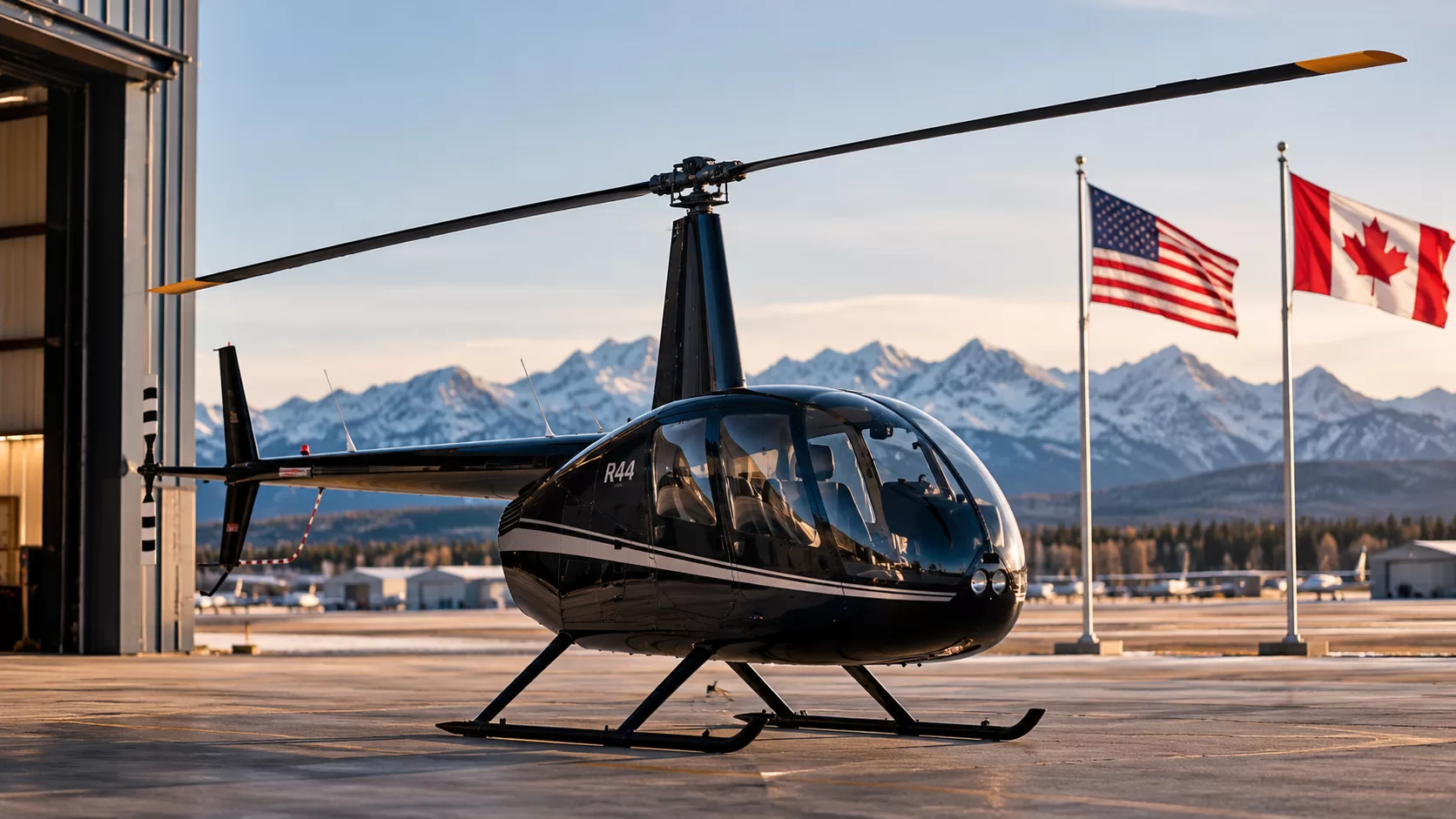
The U.S. helicopter market is much larger than Canada’s. There are more R44s for sale, more choice in configuration, and some listings look noticeably cheaper than comparable aircraft here at home.
Sometimes a U.S. aircraft really is the right purchase. But the asking price on a U.S. listing is not what that aircraft costs to have registered and flying in Canada.
The number that matters is the total cost of bringing the aircraft to Canada and getting it ready to fly. This includes the purchase price, currency exchange, taxes, import inspection, and any work needed to meet Canadian requirements. That is the number to compare against a Canadian aircraft, and it is often very different from the one on the listing.
A Story We’ve Seen Play Out
We were once representing an R44 for a Canadian seller. A buyer looked at it and decided it was overpriced. He went south, found an R44 in the U.S. at what looked like a much better price, and was happy to let us know about the deal he got.
That was until the aircraft was imported. The bill for the work required to bring it up to Canadian requirements came to roughly $40,000, and the savings he was counting on were gone.
The aircraft was not necessarily a bad aircraft. The problem was that the price had only been compared against half the picture.
Why Buyers Look to the U.S.
There are good reasons Canadian buyers look at U.S. aircraft:
- A much larger inventory to choose from
- More options for a specific configuration, colour, or avionics package
- Asking prices that can appear lower than Canadian listings
Those advantages are real. a price that looks competitive at first glance can look very different once it is converted to Canadian dollars and the rest of the import costs are added.
What the Import Process Involves
Every aircraft import is different, but most follow the same steps. This guide explains what to expect. For advice about a specific aircraft, speak with a qualified maintenance engineer, customs broker, or Transport Canada.
1. Pre-Purchase Inspection and Records Review
Before you commit to the purchase, ask someone who understands Robinson helicopters and Canadian requirements to review the aircraft and its logbooks. An aircraft can be perfectly airworthy in the U.S. and still need work before it can be certified in Canada. Finding that out before the purchase is far better than finding it out after. Our guide to aircraft logbooks covers what a thorough records review looks for.
2. Export Certificate of Airworthiness
The FAA process allows eligible aircraft leaving the U.S. to receive an Export Certificate of Airworthiness. This document supports the Canadian certification that comes later.
3. U.S. Deregistration
The owner must arrange to remove the aircraft from the U.S. registry before registering it in Canada.
The liens and ownership should be looked at and cleared before the aircraft is purchased. De registration comes well after that.
4. Customs and Taxes
The aircraft must be imported through the Canada Border Services Agency. GST, or HST depending on your province, is generally payable on the value of the aircraft at import. Duty treatment depends on where the aircraft was manufactured and other factors, so it is worth confirming with a customs broker before you commit.
5. Canadian Registration
The new owner registers the aircraft with Transport Canada and obtains Canadian registration marks. The owner must also meet Canada’s eligibility requirements for aircraft registration.
6. Import Inspection and Certificate of Airworthiness
This is where most of the surprises happen. Before Transport Canada issues a Canadian Certificate of Airworthiness, an inspector checks that the aircraft meets Canadian requirements and matches its approved design. The inspector also reviews required maintenance, approved modifications and repairs, equipment, placards, and markings. Transport Canada’s Advisory Circular 507-002 outlines the Certificate of Airworthiness process in more detail.
A proper pre-purchase inspection prevents any surprises during this phase.
7. Getting the Aircraft Home
You can bring the aircraft to Canada by ferry flight or truck. A ferry flight requires the right permissions and pilot licensing. Trucking requires partial disassembly, reassembly, and inspection. Both take time and money. Surprisingly, it makes most financial sense to fly the aircraft vs trucking.
Where the Surprise Costs Come From
None of the following costs are unusual. Problems arise when buyers fail to budget for them.
- Currency exchange and transfer fees. A small movement in the exchange rate on a six-figure purchase adds up quickly.
- GST or HST at the border. This is a significant amount that some buyers forget to plan for.
- Import inspection labour. The inspection itself takes time, and the findings often take more.
- Modifications and repairs. Work that was acceptable in the U.S. may need additional documentation or approval in Canada. Some U.S. approvals do not carry over automatically.
- Airworthiness Directives. Any gaps in AD compliance or documentation must be resolved before certification.
- Deferred maintenance. An import inspection is thorough, and it tends to find the items that a quick annual did not.
- Equipment, placards, and markings. Items that need to be changed or added to meet Canadian requirements.
- Ferry, trucking, and travel costs. Getting the aircraft and the people involved to the right place.
- Time. An aircraft sitting in a shop through the spring is an aircraft missing the flying season.
The Two Clocks Still Apply
An import does not change the basics of R44 value. Every R44 reaches its overhaul at a set number of flight hours or calendar years, whichever comes first.
A low-hour U.S. aircraft can look attractive until you notice how little calendar life it has left. Before buying, confirm where the aircraft sits on both clocks and whether it qualifies for Robinson’s extended overhaul interval. Our articles on the hidden cost most R44 owners never see and the R44 overhaul extension explain why this matters.
How to Compare a U.S. Aircraft to a Canadian One
The fairest comparison is not asking price against asking price. It is the total cost to have each aircraft registered, certified, and flying in Canada.
| U.S. Aircraft | Canadian-Registered Aircraft |
| Pre-purchase inspection and records review | Pre-purchase inspection and records review |
| Export, deregistration, and customs costs | Transfer of Canadian registration |
| GST or HST at import | Applicable taxes on the purchase |
| Import inspection and any work required for certification | Already certified in Canada |
| Ferry or trucking to Canada | Often already in the region |
| Downtime before the aircraft can fly | Typically ready to fly after closing |
Once you calculate both totals, the aircraft with the lower asking price may still offer the better value. Sometimes it is not. Either way, you are making the decision with the full picture.
Questions to Ask Before Buying in the U.S.
- What will this aircraft cost in Canadian dollars once it is landed, certified, and flying?
- Has anyone familiar with Canadian requirements reviewed the logbooks?
- Are all modifications and repairs properly documented and approved?
- Is Airworthiness Directive compliance complete and clearly recorded?
- How many hours and how much calendar time remain before overhaul?
- Are there any liens or ownership issues?
- How will the aircraft get to Canada, and who will handle the paperwork?
- How long will the aircraft be out of service during the import?
- How does this aircraft compare to what is available in Canada today?
When Importing Makes Sense
Importing is not a mistake in itself. It can be the right decision when the configuration you want is not available in Canada, when the aircraft has strong records and good remaining life, and when the landed cost still compares well after everything is accounted for.
Successful import buyers calculate the full cost before committing. Buyers who compare only asking prices often face unexpected expenses.
How Aerial Recon Helps
Aerial Recon has been Canada’s authorized Robinson dealer since 1985. We help buyers compare aircraft realistically, review aircraft history and component life, and navigate Canadian registration and import requirements.
If you have found an R44 in the U.S., we are happy to look at it with you. And if a Canadian aircraft turns out to be the better fit, we can show you what is available today through our buy and sell services.
Conclusion
A U.S. listing can look like a great deal, and sometimes it is. But the asking price is only the beginning. Include exchange rates, taxes, the import inspection, and any work required to meet Canadian requirements in your comparison.
Know the landed cost before you commit, and you will know whether you are really getting a deal.
If you are weighing a U.S. aircraft against a Canadian one, contact Aerial Recon before you sign. You can also learn more about buying a Robinson helicopter, review our guide to R44 operating costs in Canada, or browse our current R44 listings. For regulatory reference, see Transport Canada Civil Aviation.
Frequently Asked Questions
Can I import a Robinson R44 from the U.S. into Canada? Yes. R44s are regularly imported from the U.S. The process can include an Export Certificate of Airworthiness, U.S. deregistration, customs clearance, Canadian registration, and an import inspection before a Canadian Certificate of Airworthiness is issued.
Do I have to pay tax when importing a helicopter into Canada? GST, or HST depending on your province, is generally payable on the value of the aircraft at import. Duty treatment depends on where the aircraft was manufactured and other factors. Confirm the details with a customs broker or accountant before you purchase.
What is an import inspection? It is an inspection completed before a Canadian Certificate of Airworthiness is issued, confirming that the aircraft conforms to its approved type design and meets Canadian requirements, including Airworthiness Directive compliance and the approval status of modifications and repairs.
Why can importing cost more than expected? Most surprises come from work found during the import inspection, including undocumented or unapproved modifications, AD compliance gaps, deferred maintenance, and required equipment or markings. Exchange rates, taxes, and transportation add further costs.
Is a U.S. R44 cheaper than a Canadian one? Sometimes the asking price is lower, but the fair comparison is the total landed cost to have the aircraft certified and flying in Canada. Once all costs are included, a Canadian-registered aircraft can be the better value.
How long does it take to import an R44? It varies with the aircraft’s condition, the completeness of its records, how it is transported, and how much work the import inspection turns up. Planning ahead, particularly before the spring flying season, helps avoid lost flying time.
Can Aerial Recon help me evaluate a U.S. aircraft? Yes. We help buyers review aircraft history, component life, and records, and navigate Canadian registration and import requirements, so the decision is based on the full cost rather than the asking price alone.