
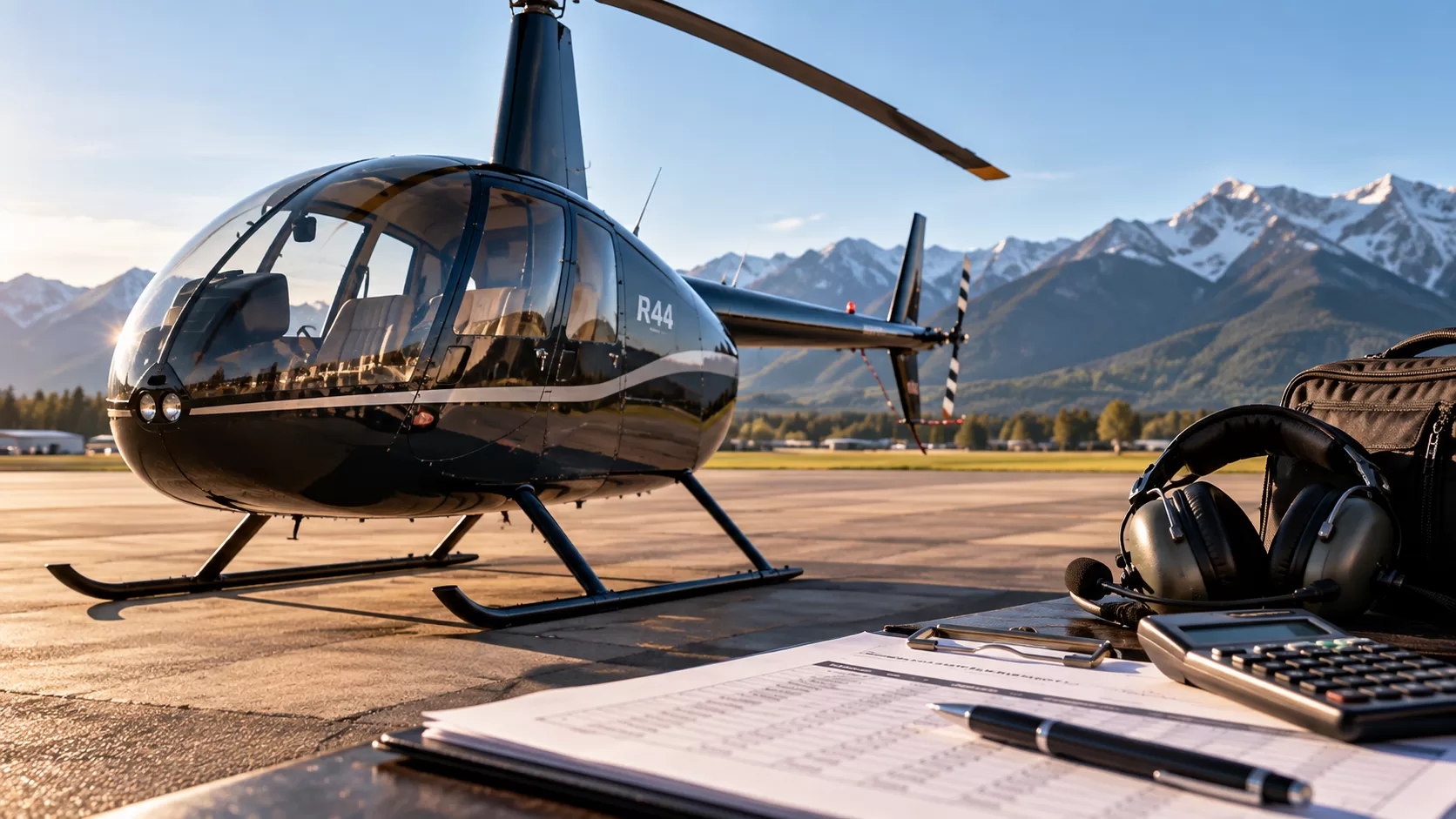
Every prospective R44 owner asks some version of the same question: what does it actually cost to own one of these helicopters? The honest answer is that the purchase price is only the starting point. The real cost of ownership shows up in the recurring expenses that follow, and understanding them upfront makes for a much smoother ownership experience.
This guide breaks down the categories that make up R44 operating costs, so you can budget realistically before you buy.
Fixed Costs vs. Variable Costs
Operating costs generally fall into two categories.
Fixed Costs
These costs occur whether or not the aircraft flies. They include:
- Insurance
- Hangar or tie-down fees
- Annual inspections
- Ongoing airworthiness compliance
Variable Costs
These costs scale with how much the aircraft is actually flown. They include:
- Fuel
- Scheduled component replacement
- Engine and airframe wear items
- Progressive maintenance tied to flight hours
Owners who fly frequently will see variable costs dominate their budget. Owners who fly less often still need to plan for the fixed costs, since those don’t go away simply because the aircraft sits in the hangar.
Fuel Costs
The R44 burns roughly 15 US gallons of avgas per hour, depending on the model, load, and flying conditions. Fuel is usually the most visible cost to new owners, since it’s paid out with every flight, but over a full year it is not necessarily the largest line item on the budget once maintenance and overhaul reserves are factored in.
Maintenance and Inspection Costs
Routine maintenance on the R44 follows a schedule of 50- hour, 100-hour and annual inspections, along with component replacements at specified intervals. Some parts, such as belts and certain bearings, have fixed replacement intervals regardless of condition.
Maintenance costs can vary significantly based on:
- Where the aircraft is maintained
- Whether the shop is factory-authorized
- The age and condition of the airframe
- Whether deferred maintenance has built up under a previous owner
Aircraft with clean, complete maintenance histories tend to cost less to maintain over time, simply because problems are caught and addressed early rather than compounding.
Insurance
Insurance costs depend on pilot experience, intended use (personal versus commercial), hull value, and coverage limits. Low-time pilots and commercial operations typically see higher premiums than experienced private owners flying for personal use.
Hangar and Storage
Where and how an R44 is stored has a real effect on long-term costs. Proper hangar storage protects the airframe and avionics from weather exposure and reduces corrosion risk, which in turn protects resale value. Owners who store aircraft outdoors or in poor conditions often pay for it later in avoidable maintenance and diminished value.
The Overhaul Reserve: Planning for the 12-Year / 2,200-Hour Milestone
This is the cost category new owners most often underestimate. Every R44 operates on two clocks: flight hours and calendar time. Historically, the aircraft reaches overhaul at 2,200 flight hours or 12 calendar years, whichever comes first, subject to applicable Robinson requirements and any current overhaul provisions.
Because of this, an owner who flies relatively few hours per year can still reach the calendar limit with a substantial number of usable hours left on the airframe. Those hours were effectively paid for but may never be flown.
The practical takeaway: build an overhaul reserve into your budget from day one, rather than treating it as a surprise expense that arrives 12 years down the road.
Total Estimated Annual Cost of Ownership
Actual figures vary by region, usage, and individual aircraft condition, but owners should budget for the combined effect of:
- Fuel proportional to annual hours flown
- Routine and scheduled maintenance
- Insurance
- Hangar or storage fees
- A portion of the eventual overhaul cost, set aside annually
Owners who plan for all five categories from the outset tend to have a far more predictable ownership experience than those who budget only for fuel and routine maintenance.
How Aerial Recon Helps Owners Manage Costs
We work with private owners, buyers, and commercial operators across the full ownership lifecycle. That includes helping current owners understand where their aircraft sits on both clocks, plan for upcoming maintenance or overhaul milestones, and make informed decisions about whether to keep flying, sell, or trade.
Conclusion
The price tag on an R44 is only part of the ownership picture. Fuel, maintenance, insurance, storage, and the overhaul reserve all combine to determine what an aircraft actually costs to own over time. Owners who understand and plan for each of these categories are far less likely to be caught off guard, whether that’s by a routine annual inspection or the 12-year overhaul milestone.
If you’re weighing the long-term economics of your R44, or considering a purchase and want a realistic picture of ongoing costs, we invite you to contact Aerial Recon. You can also explore our current buy and sell listings or learn more about the Robinson R44 if you are considering ownership. For related reading, see our guides on the Robinson R44 maintenance schedule and the hidden cost most R44 owners never see.
Frequently Asked Questions
How much does it cost per hour to fly a Robinson R44? Hourly operating costs depend on fuel prices, maintenance reserves, and how the aircraft is used, but owners should budget for fuel, an hourly maintenance reserve, and a portion of the overhaul reserve as core components of the per-hour cost.
Is the R44 expensive to maintain compared to other light helicopters?The R44 is one of the most cost effective certified helicopter in the market and has been for over 15 years.
What is the biggest hidden cost of R44 ownership? The overhaul reserve is the cost most owners underestimate, particularly when calendar time limits usable hours before they’re actually flown.
Does low annual utilization reduce operating costs? It reduces variable costs like fuel and hour-based maintenance, but fixed costs such as insurance, hangar fees, and calendar-driven overhaul timing remain regardless of how often the aircraft flies.
How much should I set aside each year for the overhaul reserve? This depends on the aircraft’s current hours and calendar age, but the key principle is to divide the anticipated overhaul cost across the years remaining before the 12-year or 2,200-hour milestone, whichever is expected to arrive first.