
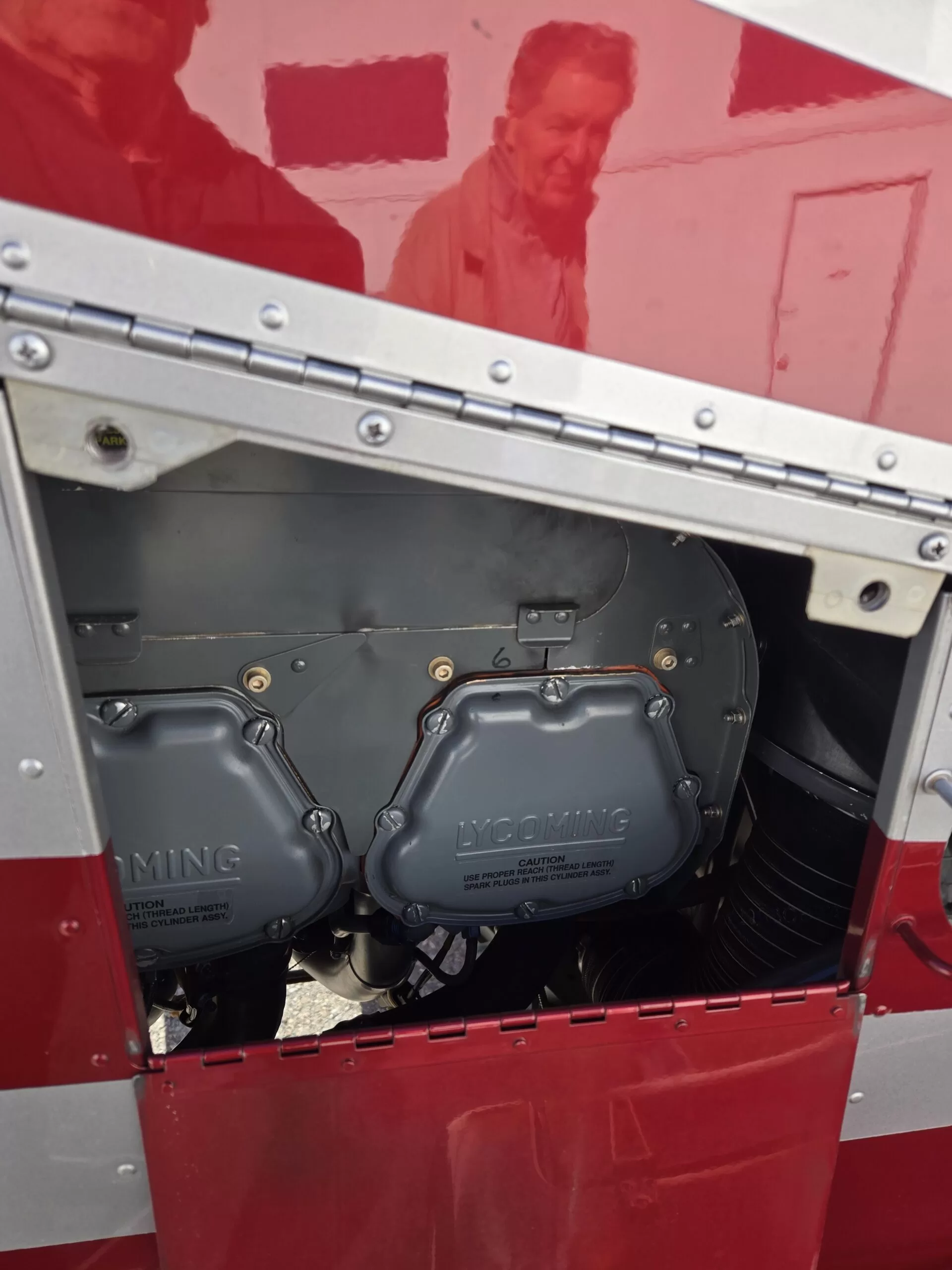
Lycoming has updated its Time Between Overhaul (TBO) schedule for the piston engines that power the R22, R44, and R44 Cadet. Here is what changed and what it means for you as a Canadian owner or operator.
The New Numbers
| Your engine | Aircraft | Factory New or Factory Rebuilt | Overhauled (baseline) |
|---|---|---|---|
| O-320-B2C | R22 | 2,500 hrs | 2,000 hrs |
| O-360-J2A | R22 Beta II | 2,500 hrs | 2,000 hrs |
| O-540-F1B5 | R44 Raven I | 2,500 hrs | 2,000 hrs |
| IO-540-AE1A5 | R44 Raven II | 2,500 hrs | 2,000 hrs |
| O-540-F1B5 | R44 Cadet | 2,500 hrs | 2,200 hrs |
The R66 is turbine-powered and is not affected by this document.
What Actually Changed
The good news: factory new and factory rebuilt engines went from 2,200 hours to 2,500 hours. Since Robinson’s airframe overhaul comes due at 2,200 hours, a factory engine now covers the full overhaul cycle with room to spare.
The fine print: the old blanket 2,200-hour TBO for Robinson engines is gone. Overhauled engines now start at a 2,000-hour baseline, and getting back to 2,200 depends on how the engine was overhauled:
- Lycoming factory overhaul: automatically gets a 200-hour extension. Still 2,200 hours. Nothing changes for you.
- Field overhaul done with only genuine Lycoming parts and Lycoming-approved procedures, with that stated on the engine’s release certificate: qualifies for the same 200-hour extension. Still 2,200 hours.
- Field overhaul using PMA parts or non-Lycoming shop procedures: stays at 2,000 hours. No extension.
High-utilization operators: engines flown at least 120 hours in every rolling 90-day period (with no 30-day stretch under 20 hours) since entering service can add a further 200 hours. Where both extensions apply, the total can reach 2,400 hours. Note that this is a lifetime utilization pattern — most privately flown machines will not meet it.
Unchanged: the 12-year calendar TBO still applies to every engine regardless of hours flown.
How This Applies in Canada
This is a manufacturer’s service instruction, not a regulation. There is nothing for Transport Canada to approve — how it affects you depends on how you operate.
If you fly privately: Lycoming’s TBO remains a recommendation, not a legal limit. Nothing changes about how you may operate your machine today. What changes is your aircraft’s market position — the paperwork behind your engine’s overhaul now directly affects its published TBO, and buyers and brokers will start checking it.
If you operate commercially: your TC-approved maintenance schedule governs. If it references “SI 1009, latest revision,” the new numbers apply automatically as of July 20, 2026. If it states a fixed hour figure, that figure stands until the schedule is amended (which requires TC approval). One sentence in your schedule determines which situation you’re in — confirm with your AME.
If your engine is affected by FAA AD 2012-19-01 (a specific range of crankshafts): none of these TBOs or extensions apply until the AD is complied with. This affects a small number of engines — your AME can confirm from your records.
What You Should Do
- Pull your engine’s release paperwork. If your engine was field-overhauled, check whether the release certificate states it was done with only genuine Lycoming parts and Lycoming procedures. That one line is now the difference between a 2,000-hour and a 2,200-hour engine.
- Commercial operators: have your AME check how your maintenance schedule references SI 1009.
- Buying or selling: expect the value gap between factory engines and field overhauls to widen. Any listing claiming “2,200 TBO” on an overhauled engine should be verified against the release certificate.
Robinson has not issued its own guidance in response to this change as of this writing. If they do, we will pass it along.